A Sunburn Through the Lens of Multi-Omics ☀️
We've all been there.

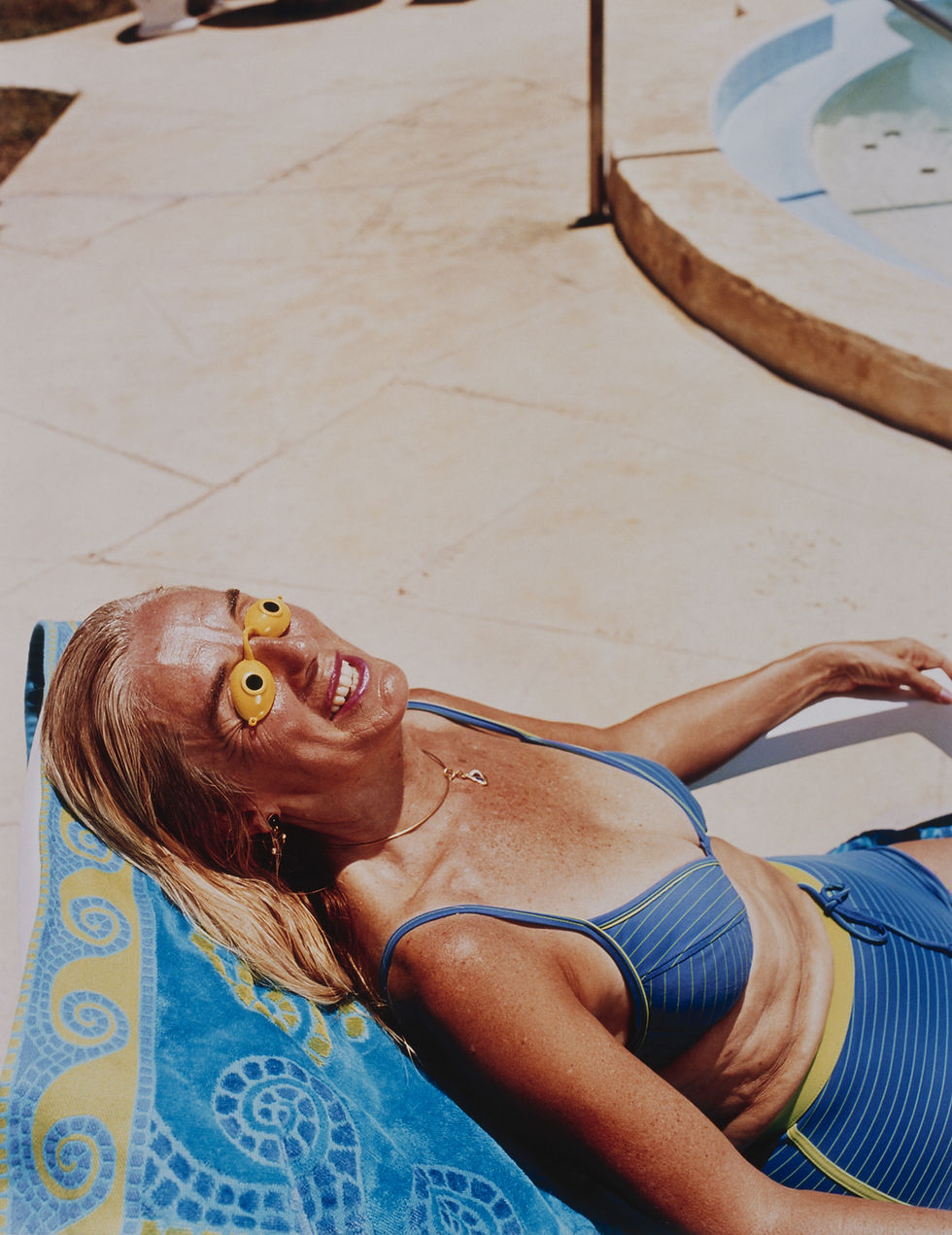
You spend a little too long at the beach, convince yourself you're "probably fine," and then a few hours later your shoulders are bright red. The next day your skin starts to feel hot. It hurts when your shirt rubs against it. A few days later, it starts peeling.
A sunburn feels like a simple thing. Too much sun, damaged skin, lesson learned.
But beneath the surface, a sunburn is actually an incredibly complex biological event. In the span of a few hours, thousands of processes unfold inside your cells as your body tries to respond to UV damage.
This is where multi-omics comes in.
Rather than looking at biology through a single lens, multi-omics allows us to study what is happening across multiple layers at once, from DNA, to genes, to proteins, to the molecules that keep our cells alive. Let's follow the story of a sunburn.
It Starts With Sunlight

Not all sunlight is the same. The Sun emits infrared radiation (which we experience as heat) and visible light (which allows us to see).
But it also emits ultraviolet (UV) radiation!
UV radiation carries enough energy to damage the molecules inside our cells, particularly DNA. Every time sunlight reaches our skin, our cells must decide how to respond. And that's where our multi-omics journey begins.
Genomics: Why Do Some People Burn While Others Tan?

Have you ever gone to the beach with a friend and watched them develop a beautiful tan while you turned into a lobster?
Part of the answer is written in your DNA.
Our genes influence how much melanin our skin produces. Melanin is the pigment responsible for skin color, and one of its most important jobs is absorbing UV radiation before it can damage DNA. Melanin is produced by specialized cells called melanocytes and distributed to neighboring skin cells.
People with darker skin generally produce more melanin, which provides greater natural protection from UV radiation.
People with lighter skin typically produce less and may burn more easily. (Of course, melanin isn't a force field. Even people with high levels of melanin can experience UV-induced DNA damage).
But from a genomic perspective, some people begin the day with more protection than
others.
Transcriptomics: What Happens Before Your Skin Turns Red?
Here's something surprising.
The redness you see after a sunburn is actually one of the last steps in the process. Long before your skin changes color, your cells already know something is wrong.
UV radiation can damage DNA almost instantly. In response, cells begin switching on genes involved in repair, stress responses, and inflammation.
Think of transcriptomics as listening in on the internal conversation taking place inside a cell.
Which genes are being activated?
Which emergency instructions are being sent?
Which repair systems are being deployed?
Hours before you notice a sunburn in the mirror, your cells are already hard at work trying to protect themselves.
Proteomics: Why Does a Sunburn Turn Red?

Once genes have issued their instructions, somebody has to carry them out. That's the job of proteins. When skin cells are damaged, they release proteins that act like alarm signals. These signals alert nearby cells and recruit immune cells to the area.
Blood vessels widen. Blood flow increases. The immune system gets to work.
And suddenly, the symptoms we recognize begin to appear.
The skin becomes red.
It feels warm.
It swells.
It becomes tender to the touch.
What we're seeing is not the damage itself. We're seeing the body's response to the damage.Proteins are the molecules coordinating that response.
Metabolomics: What Is Life Like Inside a Sunburned Cell?
While the immune system is responding, the cells themselves are fighting a different battle.
UV radiation doesn't just damage DNA directly. It also creates unstable molecules called free radicals.These molecules can damage DNA, proteins, and cell membranes.
Imagine a city trying to repair itself during a storm while simultaneously dealing with power outages and damaged infrastructure. That's what life is like for a sunburned cell.
As cells attempt repairs, they consume energy. They produce stress-related molecules. Their internal chemistry begins to change --> This is the world of metabolomics.
By studying these small molecules, scientists can understand what cells are actually experiencing during a sunburn. Not just what they're doing.
What they're feeling, chemically speaking. From a metabolomic perspective, a sunburn is a state of cellular stress.
Why Does Skin Peel?
A few days after a bad sunburn comes the part everyone hates...The peeling.

But peeling is actually a sign that your body is doing exactly what it's supposed to do.
Your skin constantly renews itself. Stem cells produce new skin cells, which gradually move toward the surface before eventually being shed.
After a severe sunburn, many of those skin cells are too damaged to function properly. Rather than keeping them around, your body removes them.
What you see peeling away is damaged tissue being replaced by healthy new cells.
It's one of the final chapters in the story.
Why Multi-Omics Matters?
A sunburn might seem simple on the surface, but we've just seen how many layers are involved. Genomics helps explain why some people are more susceptible to UV damage.
Transcriptomics reveals how cells respond when damage occurs.
Proteomics shows how the body coordinates inflammation and repair.
Metabolomics uncovers the chemical consequences unfolding inside the cell.
None of these perspectives tells the whole story on its own.
But together, they reveal something remarkable. A sunburn isn't just red skin.
It's a coordinated biological response unfolding across genes, proteins, and molecules.
And that's the power of a multi-omics perspective.


header.all-comments